
Categories
New Blog
Step By Step Guide To Fan Selection For Engineers
February 09 , 2026Cooling fan selection is a critical task in thermal management design. For engineers, choosing the right fan is not simply about airflow numbers but about balancing airflow pressure reliability noise power consumption and operating environment. An inappropriate fan selection can lead to overheating excessive noise premature failure or unnecessary cost.
This article provides a step by step guide to fan selection for engineers. It follows a practical engineering workflow that aligns fan performance with real application requirements and system constraints. The goal is to help engineers make informed and reliable fan selection decisions for electronic and industrial equipment.
Understanding The Cooling Objective
The first step in fan selection is to clearly define the cooling objective. Engineers must understand what needs to be cooled and why. This includes identifying heat generating components such as processors power modules or transformers and determining acceptable operating temperature limits.
It is also essential to clarify whether the fan is used for component level cooling enclosure ventilation or system wide airflow management. Different cooling objectives require different fan types airflow patterns and installation strategies.
Estimating Heat Load And Thermal Margin
Once the cooling objective is clear the next step is estimating the total heat load. Heat load is typically calculated based on power consumption and efficiency losses of components inside the system.
Engineers should include a thermal margin to account for variations in operating conditions aging effects and environmental changes. Designing without sufficient margin can result in thermal issues later in the product lifecycle.
Determining Required Airflow
Required airflow is calculated based on heat load allowable temperature rise and air properties. This step translates thermal requirements into airflow demand.
However theoretical airflow values must be adjusted to reflect real system conditions. Airflow losses caused by filters heat sinks grilles and internal obstructions significantly affect actual cooling performance. Engineers should account for these losses early in the design stage.
Evaluating System Impedance
System impedance describes the resistance that airflow encounters while moving through the equipment. It is influenced by enclosure geometry component density and airflow path design.
Understanding system impedance is critical for selecting a fan with the appropriate pressure capability. A fan with high airflow but low static pressure may fail to deliver required cooling in a restrictive system.
Selecting Fan Type
Based on airflow and pressure requirements engineers can select an appropriate fan type. Axial fans are suitable for high airflow low resistance applications. Centrifugal fans are preferred when higher pressure is required to overcome airflow resistance. Cross flow fans are used when uniform airflow distribution across a wide area is needed.
Each fan type has advantages and limitations that must be matched with system design goals.
Matching Fan Performance Curves
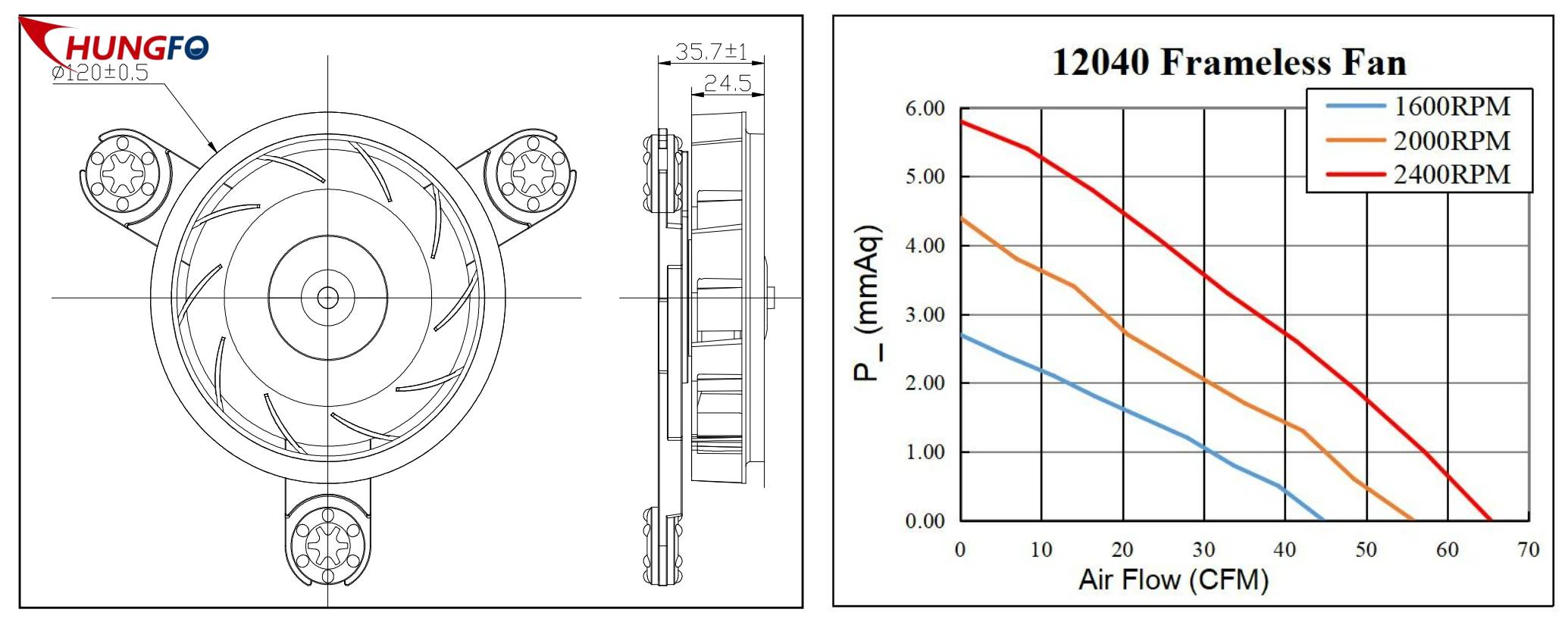
Fan performance curves provide valuable insight into airflow pressure and operating points. Engineers must select a fan whose operating point aligns with the system impedance curve.
Operating too far from the optimal point can reduce efficiency increase noise and shorten fan lifespan. Performance curve matching is one of the most important steps in professional fan selection.
Considering Reliability And Lifetime
Reliability is especially important for industrial and mission critical equipment. Engineers should evaluate bearing type rated lifetime and operating temperature range.
Continuous operation applications benefit from fans designed for long service life and stable performance. China Chungfo fan focuses on consistent performance characteristics suitable for demanding operating conditions.
Environmental And Regulatory Considerations
Operating environment strongly affects fan selection. Temperature humidity dust and vibration levels must all be considered. Outdoor or harsh environments may require higher protection levels and corrosion resistant materials.
Engineers should also consider applicable safety and regulatory requirements such as electrical standards and environmental compliance.
Noise And Power Consumption Optimization
Noise and power consumption are often secondary requirements but can become critical in certain applications. Engineers must balance cooling performance with acoustic limits and energy efficiency targets.
Lower fan speed larger fan size or optimized airflow paths can help reduce noise while maintaining adequate cooling.
Installation And Integration Constraints
Physical constraints such as available space mounting method and airflow direction influence fan selection. Engineers should ensure that the selected fan can be easily integrated into the mechanical design without compromising airflow efficiency.
Improper installation can negate the benefits of even the best fan selection.
Verification And Testing
The final step in fan selection is verification through testing. Thermal testing under worst case conditions validates assumptions made during design.
Testing allows engineers to fine tune fan speed control and confirm that the cooling system meets reliability and performance expectations.
Conclusion
Fan selection is a systematic engineering process that requires a clear understanding of thermal requirements system characteristics and operating conditions. By following a step by step approach engineers can reduce risk improve reliability and optimize cooling performance.
Successful fan selection transforms thermal management from a potential problem into a stable foundation for product performance.