Categories
New Blog
What Makes An AC Cross Flow Fan Essential For High-Traffic Elevator Cabin Ventilation?
July 24 , 2026As modern commercial buildings continue to grow taller and accommodate more occupants, elevators have become one of the most frequently used enclosed spaces. During peak commuting hours, hundreds or even thousands of passengers may use the same elevator every day. This constant flow of people generates heat, humidity, odors, and airborne particles, making efficient cabin ventilation increasingly important.
Among the many ventilation solutions available today, the AC Cross Flow Fan has become one of the preferred choices for elevator manufacturers because it delivers uniform airflow while maintaining low noise levels and compact installation dimensions. Whether in office towers, shopping malls, hospitals, hotels, or residential high-rises, cross flow fan technology helps improve passenger comfort while supporting reliable elevator operation.
This article explains why cross flow fans are essential for elevator ventilation, how they compare with traditional cooling solutions, what factors should be considered during selection, and why manufacturers worldwide choose Chungfo Fan as their long-term cooling partner.
Why Elevator Cabin Ventilation Matters More Than Ever
Modern elevators are no longer simple transportation devices. They have evolved into intelligent systems equipped with touchscreens, surveillance cameras, wireless communication modules, LED lighting, voice systems, emergency intercoms, and various electronic controllers.
These components generate heat continuously. Meanwhile, passengers themselves become the largest heat source inside the cabin.
Poor ventilation may lead to:
Higher cabin temperature
Uncomfortable humidity
Accumulated odors
Reduced passenger satisfaction
Fogging of mirrors or glass
Overheating of electronic components
Shortened service life of lighting and display systems
Energy waste caused by excessive air conditioning compensation
As buildings become more energy efficient and airtight, natural air exchange becomes limited, making mechanical ventilation increasingly important.
Why Cross Flow Fans Are Ideal for Elevator Applications
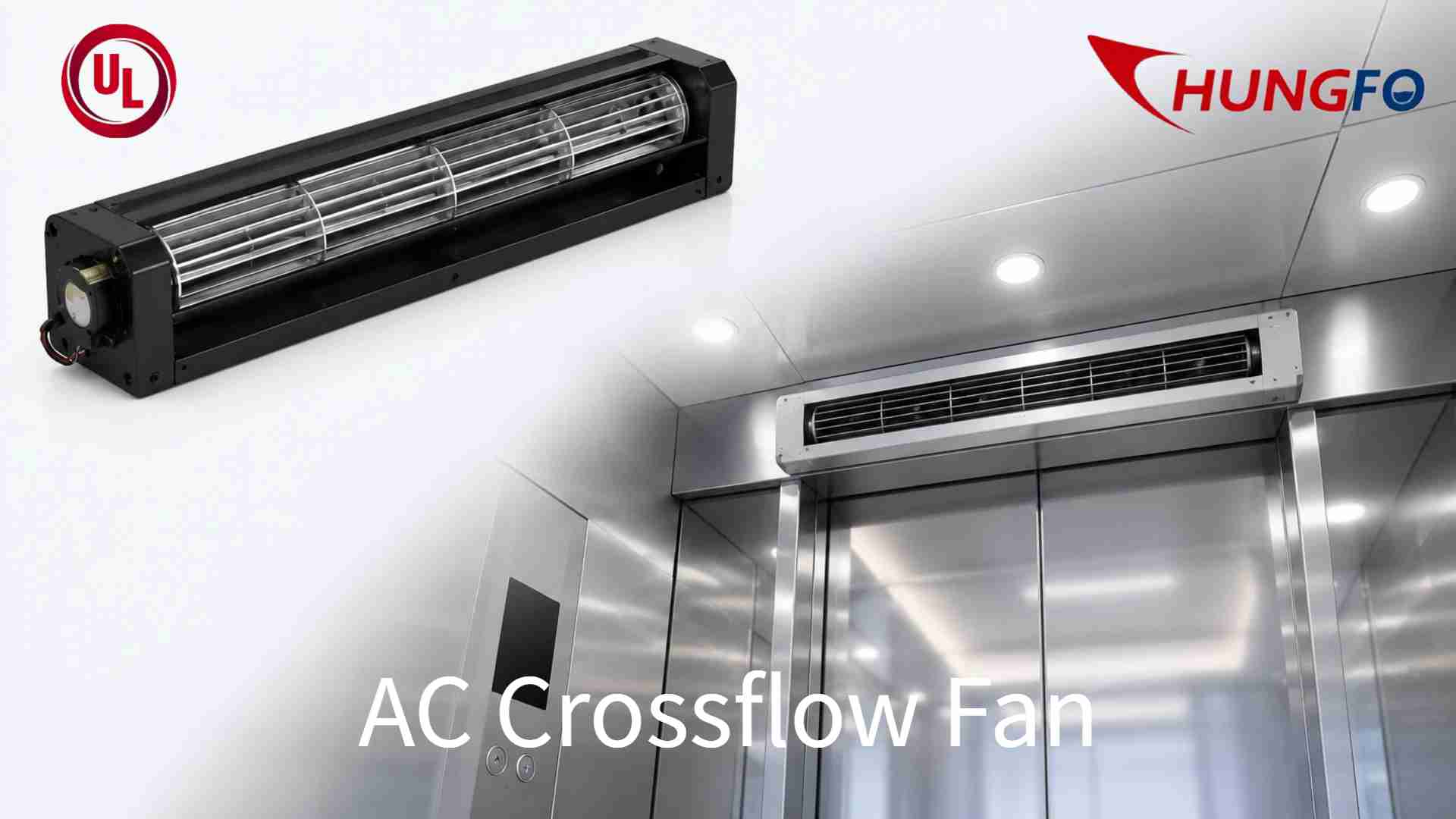
Unlike axial fans that concentrate airflow into one direction, an AC Cross Flow Fan creates a long curtain of air across the entire width of the cabin.
This airflow pattern provides several advantages.
Uniform Air Distribution
Passengers standing in different corners experience similar airflow rather than concentrated wind directly blowing onto one person.
Low Noise Operation
Elevator cabins are enclosed environments where noise becomes highly noticeable.
Cross flow fans typically generate smoother airflow with reduced turbulence, helping create a quieter riding experience.
Slim Installation Design
Elevator ceilings provide very limited installation space.
The elongated structure of a cross flow fan allows manufacturers to integrate ventilation into narrow ceiling cavities without sacrificing airflow.
Continuous Air Circulation
Instead of simply pushing air forward, cross flow technology continuously circulates air throughout the cabin, reducing stagnant zones where heat accumulates.
Improved Passenger Comfort
Uniform airflow prevents localized hot spots while avoiding excessive drafts that passengers often dislike.
Challenges in High-Traffic Elevators
High-traffic elevators experience much harsher operating conditions than residential elevators.
Commercial office buildings may operate more than 20 hours per day.
Hospitals require continuous operation.
Shopping malls experience heavy weekend traffic.
Hotels operate almost around the clock.
Airports and subway stations may handle tens of thousands of passengers daily.
These demanding environments require ventilation systems capable of providing:
Continuous operation
Stable airflow
Low maintenance
High reliability
Energy efficiency
Long operating life
This explains why many premium elevator manufacturers increasingly specify AC Cross Flow Fan solutions.
Comparing Cross Flow Fans with Axial Fans
Both technologies have their strengths, but elevator applications often favor cross flow designs.
Axial fans provide high airflow concentrated in one direction. They are suitable for open ventilation spaces where airflow distance is important.
Cross flow fans distribute airflow evenly across a wider surface.
This creates a gentler indoor environment, making passengers feel more comfortable during both short and long rides.
Because elevator cabins have limited volume and many occupants stand close together, airflow quality often becomes more important than airflow velocity.
The Role of Airflow in Passenger Experience
Passengers rarely notice good ventilation.
However, they immediately recognize poor ventilation.
Signs include:
Feeling stuffy
Sweating during summer
Lingering odors
Warm air near the ceiling
Uneven temperatures
Noise from ventilation equipment
A properly selected AC Cross Flow Fan minimizes all of these issues while operating almost unnoticed.
Good ventilation directly contributes to positive building experiences and improves overall perceptions of building quality.
Selecting the Right Cross Flow Fan
Choosing an elevator ventilation fan involves more than airflow specifications.
Engineers should evaluate several factors.
Airflow Volume
Adequate airflow ensures sufficient air exchange without creating uncomfortable drafts.
Noise Level
Quiet operation is especially important in premium commercial buildings and hotels.
Motor Efficiency
Efficient motors reduce operating costs over many years of continuous use.
Bearing Quality
High-quality bearings improve reliability and reduce maintenance frequency.
Service Life
Many elevators are expected to operate for more than 15 years.
The ventilation system should offer long-term stability.
Environmental Resistance
Components should tolerate dust, humidity, vibration, and temperature variation.
Safety Certification
Products complying with international standards simplify global elevator certification.
Integration with Intelligent Elevators
Today's elevators increasingly include smart technologies such as:
IoT monitoring
Passenger counting
Air quality sensors
Temperature monitoring
Automatic speed control
Energy management systems
Cross flow fans can easily integrate with variable speed control systems, allowing airflow to increase automatically during busy periods while reducing energy consumption during low traffic hours.
This intelligent ventilation strategy improves both comfort and efficiency.
Supporting Electronic Cooling Inside Elevator Systems
Besides cabin ventilation, many elevator electrical cabinets require dedicated cooling.
Smaller products like the 80mm cooling fan are commonly installed inside control cabinets to cool:
Power supplies
Communication modules
Inverter drives
Relay assemblies
Control boards
Touch display systems
Because electronic reliability directly affects elevator safety, proper cabinet cooling becomes just as important as passenger ventilation.
Applications Beyond Elevator Cabins
Cross flow technology is widely used across multiple industries.
These include:
Air curtains
HVAC equipment
Medical equipment
Commercial refrigeration
Wine coolers
Display cabinets
Smart home appliances
Drying equipment
Air purification systems
Industrial control cabinets
This versatility demonstrates the excellent airflow characteristics of cross flow technology.
Complementary Cooling Solutions
Although elevator cabins typically rely on cross flow fans, other cooling products often work together within the complete elevator system.
For example, a 150mm dc fan may be selected for battery backup systems, charging equipment, or auxiliary electrical cabinets where DC power is available.
Using multiple cooling technologies allows engineers to optimize airflow throughout the entire elevator system.
Why Global Manufacturers Choose Chungfo Fan
Reliable ventilation begins with reliable manufacturing.
Chungfo Fan has become a trusted supplier for global OEM and ODM customers by focusing on product consistency, engineering innovation, and strict quality management.
The company specializes in manufacturing:
AC cooling fans
DC cooling fans
AC Cross Flow Fan
DC Cross Flow Fan
Blower fans
EC fans
Customized cooling solutions
With modern manufacturing facilities, automated production equipment, precision balancing systems, comprehensive airflow laboratories, noise testing facilities, and rigorous reliability verification, Chungfo Fan delivers products suitable for demanding industrial applications.
Its engineering team works closely with customers to optimize airflow performance, reduce operating noise, improve energy efficiency, and customize products for unique installation requirements.
Whether serving elevator manufacturers, HVAC companies, refrigeration equipment producers, or intelligent appliance brands, Chungfo Fan provides dependable thermal management solutions supported by stable production capacity and international quality standards.
Future Trends in Elevator Ventilation
Future elevator ventilation will become increasingly intelligent.
Several industry trends are emerging.
AI-based airflow adjustment
Real-time air quality monitoring
Lower power consumption
Ultra-quiet operation
Compact integrated designs
Higher efficiency motors
Predictive maintenance
Digital monitoring
Remote diagnostics
These innovations will require cooling fans that combine high reliability with intelligent control capabilities.
Cross flow technology is well positioned to meet these future requirements.
Conclusion
Passenger comfort has become a key indicator of modern building quality. Efficient elevator ventilation is no longer a luxury but an essential requirement for safety, comfort, and equipment reliability.
An AC Cross Flow Fan offers uniform airflow, quiet performance, compact installation, and long service life, making it the preferred ventilation solution for high-traffic elevator cabins.
When combined with complementary products such as the 150mm dc fan and the 80mm cooling fan, building designers can create complete thermal management systems that protect both passengers and electronic equipment.
As global demand for smarter buildings continues to grow, experienced manufacturers like Chungfo Fan will remain valuable partners by providing innovative, energy-efficient, and highly reliable cooling solutions for the next generation of elevator systems.