Categories
New Blog
The Key Role of Cooling Fans in Refrigeration Equipment
March 09 , 20261. Engineering Structure of Refrigerator Heat Dissipation Systems
Refrigerators operate based on the vapor compression refrigeration cycle. The main components include the compressor, condenser, evaporator, expansion device, and heat dissipation system.
During operation, the compressor compresses low-pressure refrigerant gas into high-temperature, high-pressure gas. This gas then enters the condenser, where it releases heat and condenses into liquid refrigerant.
Efficient heat dissipation in the condenser area is essential for maintaining system stability and improving energy efficiency.
To enhance heat transfer performance, modern refrigerators often use forced air cooling systems with cooling fans. Compared with natural convection, fan-assisted cooling significantly improves thermal exchange efficiency.
2. Working Principle of Refrigerator Cooling Fans
Cooling fans in refrigerators are usually installed near the condenser or compressor. Their main function is to accelerate airflow and remove heat from the condenser surface.
When the fan operates, it generates continuous airflow around the condenser. Air passing over the hot condenser absorbs heat and carries it away from the refrigeration system.
For engineering applications, cooling fans must meet several requirements:
Stable airflow output
Low noise operation
High reliability and long service life
Energy-efficient performance
Therefore, parameters such as airflow, static pressure, speed, noise level, and power consumption must be considered during fan selection.
3. Application of DC Cooling Fan in Refrigerators
The DC Cooling Fan is widely used in modern refrigerators, especially in energy-efficient and smart appliance models.
Compared with traditional AC fans, DC fans offer several advantages.
First, they provide higher energy efficiency. Brushless DC motors allow precise speed control, reducing overall power consumption.
Second, DC fans operate more quietly, making them suitable for household environments.
In addition, DC Cooling Fans can be integrated with intelligent control systems to automatically adjust speed according to compressor load and temperature conditions.
This dynamic cooling strategy improves the refrigerator’s energy efficiency while extending the lifespan of key components.
4. Design Advantages of Axial Fan in Condenser Cooling
The Axial Fan is one of the most common fan types used in refrigerator cooling systems. The airflow direction of an axial fan runs parallel to the fan shaft, allowing it to deliver large airflow volumes under low resistance conditions.
Because condenser areas require high airflow rates, axial fans are well suited for this application.
Compared with centrifugal fans, axial fans feature simple structures, compact size, and lower manufacturing costs.
Engineering optimization of axial fans typically involves:
Matching fan diameter with airflow requirements
Blade angle design
Air duct structure optimization
Dust and moisture protection
A well-designed airflow channel can significantly reduce resistance and improve heat dissipation efficiency.
5. Impact of High Airflow Fan on System Performance
In large-capacity refrigerators, the High Airflow Fan plays a critical role in maintaining stable operation.
When the refrigerator operates under high load or high ambient temperature conditions, the condenser must release heat rapidly. Insufficient heat dissipation can cause the compressor to operate under heavy load, increasing energy consumption and reducing equipment lifespan.
High airflow fans improve air circulation and help transfer heat quickly into the surrounding environment.
Some advanced refrigerator designs even use multi-fan cooling systems to create uniform airflow fields and improve overall thermal performance.
6. Reliability and Service Life of Cooling Fans
Since refrigerators are designed for long-term continuous operation, the reliability of cooling fans is extremely important.
Typical engineering requirements include:
Continuous operation capability
High temperature resistance
Low vibration performance
Moisture and dust protection
Bearing type also influences fan lifespan. Common types include sleeve bearings and ball bearings, with ball bearings typically offering longer service life and better stability.
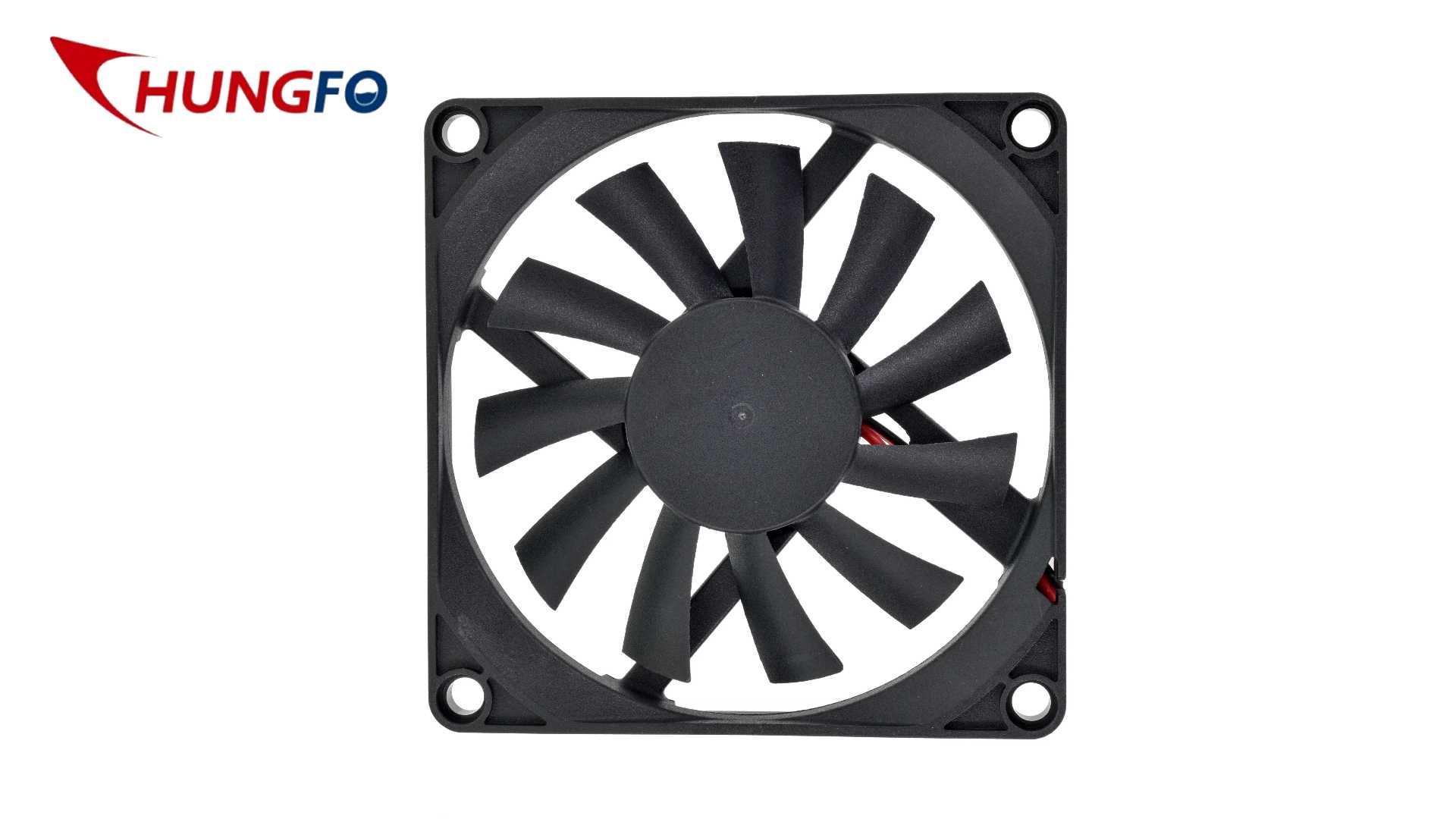
Professional cooling solution providers such as China Chungfo Fan offer a wide range of cooling fan products suitable for refrigeration equipment and other industrial applications.
7. Conclusion
The heat dissipation system plays a crucial role in maintaining the stability of refrigerator refrigeration cycles.
Through optimized condenser design, airflow channels, and high-performance cooling fans, manufacturers can significantly improve energy efficiency and reliability.
Technologies such as DC Cooling Fan, Axial Fan, and High Airflow Fan will continue to play an increasingly important role in the engineering design of modern refrigeration equipment.
Tags :