
Categories
New Blog
From Design To Delivery: How Industrial Fans Are Manufactured?
January 09 , 2026Industrial fans play a critical role in ensuring stable operation in industrial equipment, electronic systems, and automation applications. From the initial concept to final delivery, the manufacturing of industrial fans involves multiple stages, each of which directly influences performance, reliability, and service life.
The process begins with a clear understanding of application requirements. Different systems vary in power density, installation space, ambient temperature, and noise limitations. These factors determine the fundamental direction of fan design. A dc cooling fan is often selected for applications requiring stable power supply and high energy efficiency. An axial fan is commonly used in systems with relatively low airflow resistance, while a blower fan is better suited for complex airflow paths or applications requiring focused air delivery. At this stage, engineers evaluate airflow, pressure, and power consumption to achieve an optimal balance.
During the design phase, the fan structure is refined in detail. Blade geometry, frame dimensions, motor configuration, and bearing systems all contribute to overall performance. Rather than focusing on peak output alone, industrial fan design emphasizes efficiency, noise control, durability, and long-term stability. For industrial-grade dc cooling fan products, consistent operation over extended periods is often prioritized over maximum performance.
Material selection is another essential part of the manufacturing process. Fan frames and impellers must balance strength, thermal resistance, and weight, while motor windings, magnets, and bearings directly affect efficiency and lifespan. High-quality materials help axial fan and blower fan products maintain stable performance and reduce long-term degradation.
Once design and materials are confirmed, production begins. Precision tooling is critical to maintaining dimensional consistency, as even minor deviations can affect assembly accuracy and operating noise. Processes such as molding, stamping, winding, and assembly are carried out under strict process controls to ensure each dc cooling fan meets design specifications.
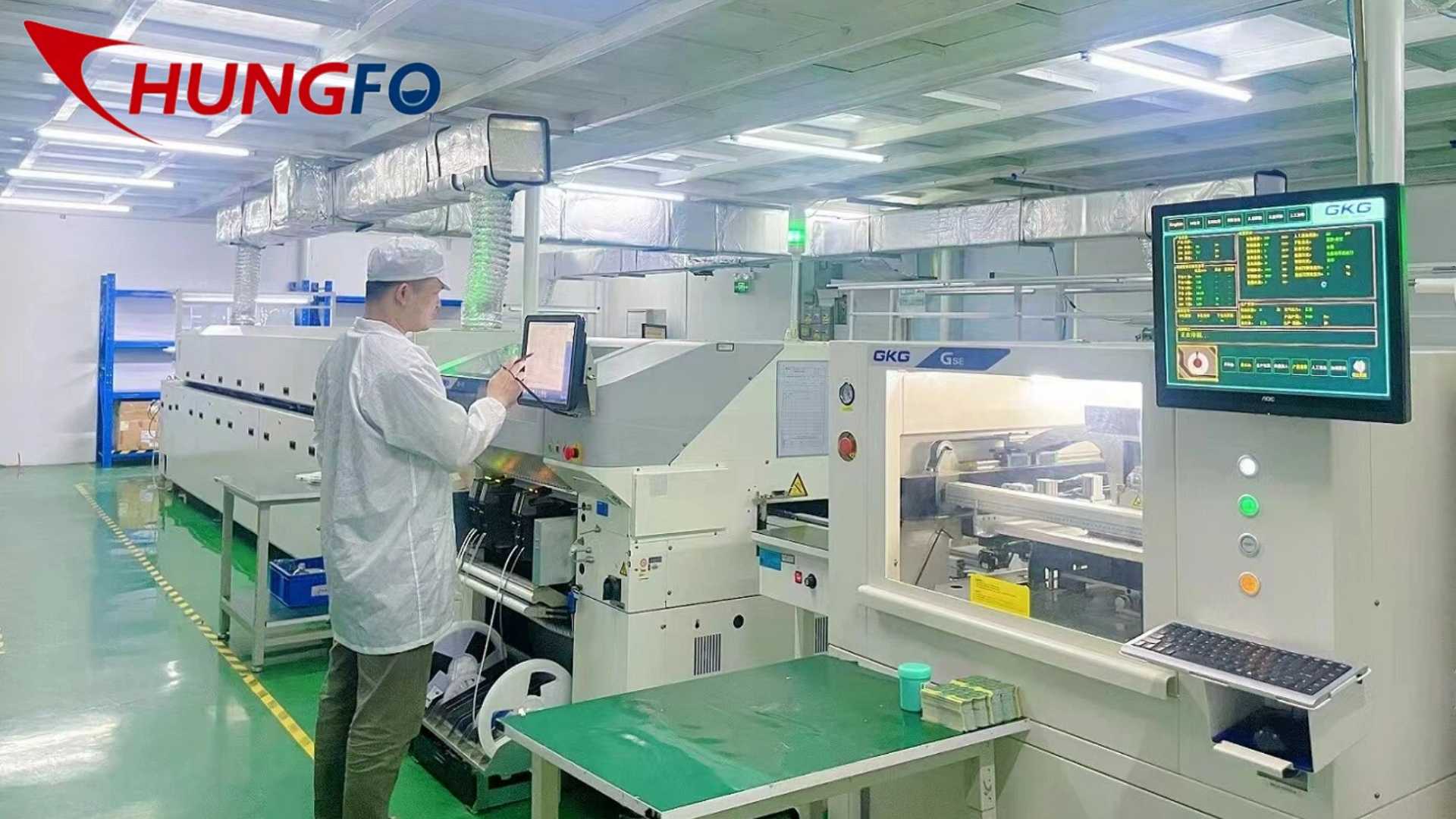
Quality control is integrated throughout manufacturing. Key parameters including speed, current, airflow, and noise levels are monitored to identify potential issues early. While inspection focus may vary between axial fan and blower fan designs, the goal remains the same: consistent performance across production batches. This consistency is particularly valuable for OEM customers, helping to reduce system validation effort and after-sales risks.
After assembly, fans undergo aging tests and reliability verification. By simulating long-term operation and varying environmental conditions, manufacturers can confirm stable performance in real-world applications. These tests serve as a final validation of both design integrity and manufacturing quality.
Once all tests are completed, the fans move to packaging and delivery. Proper packaging protects products during transportation and storage. For long-term customers, delivery schedules are often aligned with project timelines to ensure smooth integration into production lines. China Chungfo fan follows this complete manufacturing process to deliver reliable and consistent industrial cooling solutions.
China Chungfo fan,From design to delivery, industrial fan manufacturing is a comprehensive system that combines engineering expertise, production capability, and quality management. Attention to each stage ensures that dc cooling fan, axial fan, and blower fan products perform reliably in demanding industrial environments over the long term.