From Custom Development to Repeat Orders: How China Chungfo Fan Supports Printer, Server and Consumer Electronics OEM Customers
Nov 13, 2026Industry: Servers, Printing Equipment and Consumer Electronics
Product Models: HTD02010, HTD04007, HTD04010, HTD04510, HTD06025 and HTD08025
Cooperation Model: OEM/ODM Customization, Engineering Matching, Sample Evaluation, Mass Production and Repeat Orders
Target Customers: Printer Manufacturers, Server OEMs, Edge Computing Equipment Manufacturers and Electronics Procurement Teams
1. Background: Why Cooling Has Become an Important Part of Electronics Design
In the electronics manufacturing industry, a cooling fan may be a relatively small component, but its performance can have a significant impact on the stability, service life and overall operating experience of an electronic product.
Printers, servers, display equipment and consumer electronics all contain electronic components that generate heat during operation. As equipment becomes more compact and integrated, internal space becomes increasingly limited. Power modules, control boards, processors and other heat-generating components must often operate within a relatively confined enclosure.
This creates new challenges for thermal management.
A standard off-the-shelf fan may meet the basic voltage and dimensional requirements, but that does not necessarily mean it will provide the airflow distribution, static pressure, noise performance or installation compatibility required by a particular device.
For OEM manufacturers, selecting a cooling fan is therefore more than comparing product dimensions and rated voltage. It involves understanding the equipment structure, identifying heat sources and evaluating the actual operating conditions.
This is particularly important in printer manufacturing.
A printer may contain several different electronic and mechanical modules, each with its own thermal requirements. The available installation space, internal airflow path and acceptable operating noise can vary between product platforms.
Servers and edge computing equipment have different priorities. They may require continuous airflow, suitable static pressure, speed control and operating-status feedback to support reliable operation.
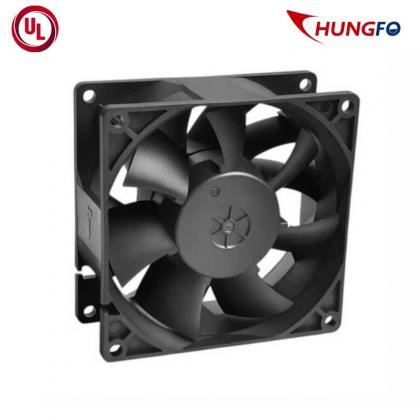
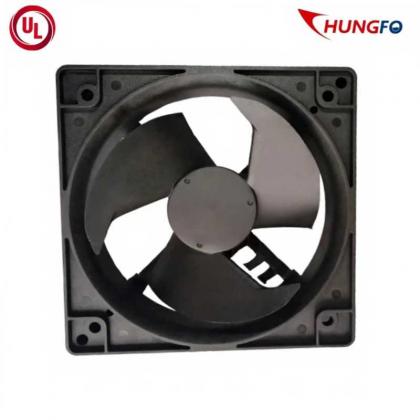
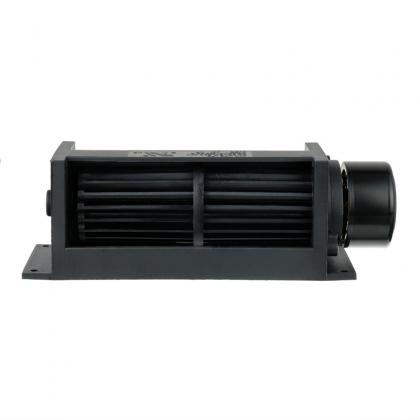
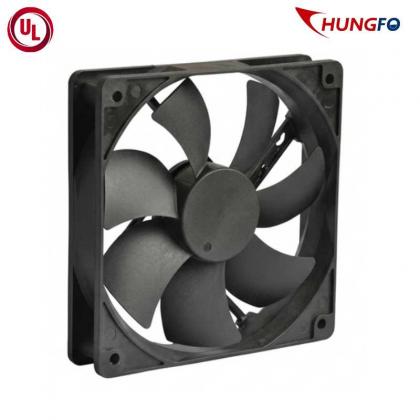
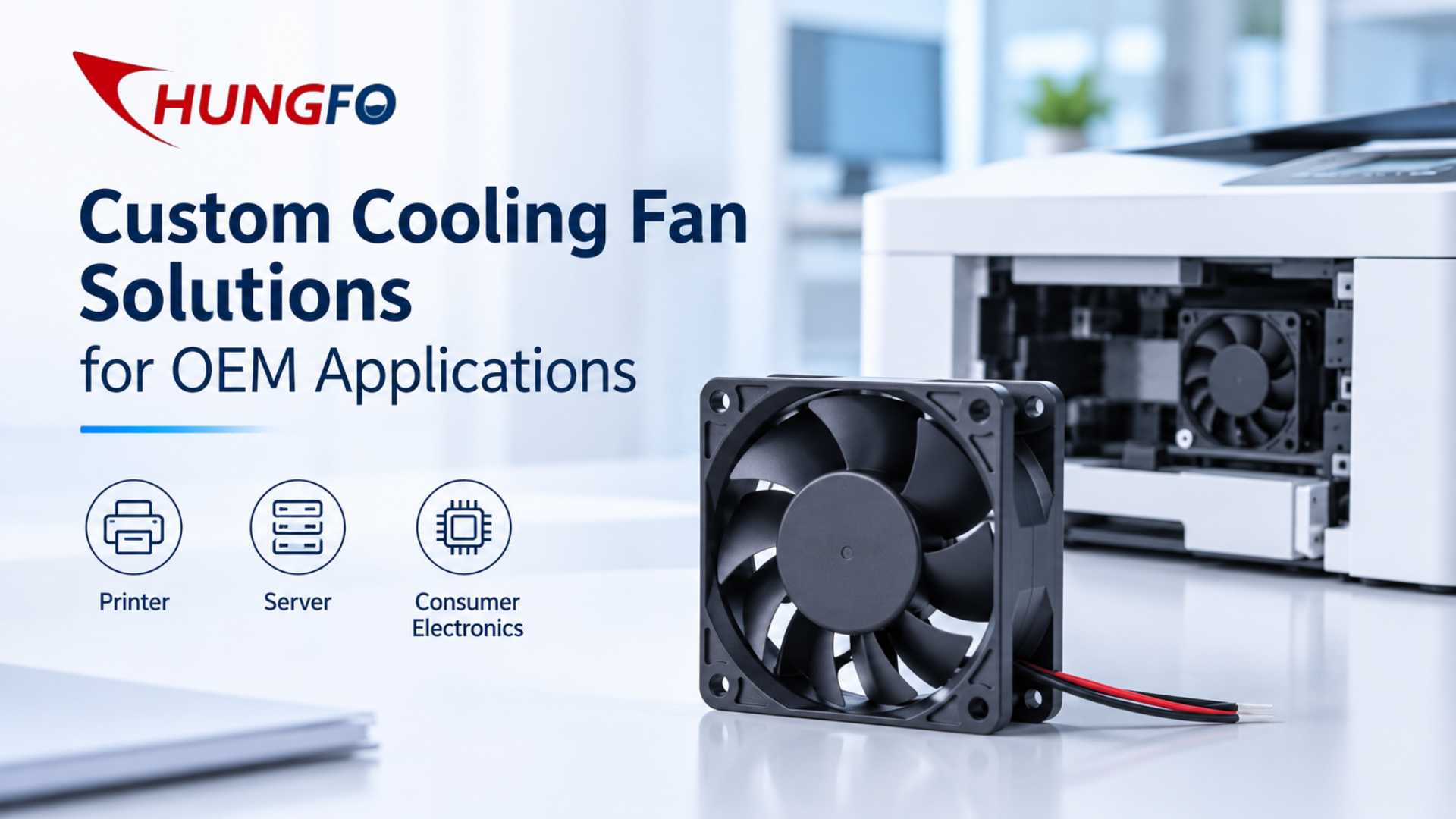
China Chungfo Fan works with equipment manufacturers to provide DC fans, AC fans,EC fans, blowers, cross-flow fans and customized cooling solutions for different applications.
Among our established application areas, printer cooling is an important example of how customized fan development can develop into a long-term supply relationship.
Unlike one-time purchases of standard components, customized fan projects require communication between the fan supplier and the equipment manufacturer. The product must be matched to the customer's design, evaluated through samples and confirmed for actual application requirements.
Once the customized fan has completed the necessary evaluation and becomes part of the customer's production system, it can support subsequent manufacturing programs and repeat purchasing.
This is one of the key characteristics of customized cooling fans supplied by China Chungfo Fan: we focus not only on delivering a fan, but also on helping customers establish a suitable and repeatable cooling solution for their equipment.
2. A Long-Term Printer Customer: From Product Matching to Repeat Purchasing
In printer manufacturing, DC cooling fans for printer are generally selected according to the structure and operating requirements of the specific equipment platform.
Different printer models may have different internal layouts, heat sources, air intake positions, exhaust paths and available mounting spaces.
Even when two printers use fans with similar external dimensions, their actual cooling requirements may not be identical.
For equipment manufacturers, fan selection can involve several departments, including R&D engineers, mechanical designers, quality management teams and purchasing departments.
The engineering team needs to evaluate more than whether the fan can physically fit into the enclosure.
Typical considerations include:
For our long-term printer customer, customization has been an important foundation of the cooperation.
At the beginning of a project, China Chungfo Fan evaluates the customer's application requirements, installation conditions and product specifications to identify a suitable cooling fan.
When a standard product cannot fully satisfy the requirements, additional customization may be necessary. This can involve dimensions, electrical configurations, cable arrangements, connectors or other product details.
The next important stage is sample evaluation.
The customer can install the samples into the actual equipment and assess whether the fan performs as expected under real operating conditions.
This step should not be overlooked.
A fan may perform normally during an individual product test, but its actual airflow performance can change after installation inside a complete machine.
Internal obstructions, narrow air passages, inlet resistance, exhaust arrangements and nearby components can all affect airflow.
For this reason, customized fan development is not simply about producing a component with a particular size. It is about achieving compatibility between the fan and the customer's equipment.
After the product has completed the required sample confirmation and application evaluation, its specifications can be established for subsequent production.
Future purchasing can then follow the confirmed product requirements instead of restarting the entire selection process.
This is an important reason why customized printer cooling fans can become long-term production components rather than one-time purchases.
For an OEM manufacturer, a validated customized fan is more than a purchased part. It is a component that has been evaluated within the equipment development and manufacturing process.
3. Why Customized Cooling Fans Can Lead to Long-Term Business Relationships
In B2B electronics manufacturing, repeat purchasing is generally built on product compatibility, consistent quality and dependable supply.
For customized cooling fans, changing suppliers is not always as simple as replacing one component with another component of the same size.
Two fans may have identical external dimensions and rated voltage but different airflow characteristics, static pressure, operating speeds, noise levels, current consumption or electrical interfaces.
These differences may require the equipment manufacturer to conduct additional tests. In some situations, changes to the internal airflow structure or control system may also be necessary.
Consequently, OEM customers often place considerable importance on a supplier's ability to provide consistent products over an extended period.
3.1 Customized Specifications Improve Equipment Compatibility
The first purpose of customization is to address equipment-specific installation and performance requirements.
Customers may have particular requirements for fan length, width, thickness, mounting-hole positions, housing structure, blade design, cable direction and connector configuration.
These details can be especially important for printers and compact consumer electronics, where available internal space is limited.
China Chungfo Fan can evaluate customer requirements and discuss suitable product configurations based on the actual application.
Rather than selecting a product solely according to its external dimensions, the objective is to identify a fan that can work effectively within the customer's equipment structure.
3.2 Confirmed Specifications Reduce Repeated Development Work
Once a customized fan has passed the customer's required installation and application evaluation, its confirmed specifications can serve as the reference for subsequent purchasing.
This does not mean that customers no longer need incoming quality inspections or production checks.
Instead, it helps reduce unnecessary repetition in product selection, engineering design and application verification.
For equipment manufacturers with ongoing production programs, this can save engineering resources and simplify procurement planning.
3.3 Product Consistency Supports Manufacturing Stability
OEM manufacturers depend on reliable component supply to maintain production schedules.
Changes in fan dimensions, electrical specifications, connectors or operating characteristics can affect equipment assembly, quality inspections and after-sales service.
A reliable supplier therefore needs to do more than manufacture the required product.
It should also maintain appropriate control over product specifications, manufacturing processes and quality inspections.
China Chungfo Fan focuses on product development, material selection, manufacturing and outgoing quality control to support customers requiring customized products for ongoing production.
3.4 Engineering Communication Matters More Than a Simple Quotation
Customized projects rarely begin with every technical detail already finalized.
A customer may initially provide equipment photographs, installation dimensions, existing fan specifications or preliminary performance requirements.
As product development progresses, additional requirements may emerge. These can include changes to cable connections, connectors, operating speed, airflow or other design details.
A supplier that understands the actual application can contribute more value than one that simply provides a quotation based on product dimensions.
This is the cooperation approach adopted by China Chungfo Fan: understanding the application, matching a suitable product, supporting sample evaluation and helping customers move toward mass production.
4. Recorded Product Models for Different Electronics Cooling Applications
In addition to printer applications, China Chungfo Fan has recorded several fan models associated with server, electronics and consumer electronics applications.
These models provide a reference product portfolio for different equipment projects.
However, the suitability of each model must be confirmed according to the customer's installation space, power supply, airflow resistance and thermal management objectives.
The recorded model examples include:
These are examples from the recorded product portfolio. They do not indicate that every model has been supplied to the same customer or used in the same equipment category. Final model selection should be based on actual product specifications and application evaluation.
4.1 Servers and Edge Computing Equipment
Servers and edge computing systems require effective thermal management during continuous operation.
As equipment becomes more integrated, processors, power modules, storage devices and other electronic components may be installed within relatively limited spaces.
Fan selection must therefore consider internal temperature rise, airflow resistance, intake and exhaust arrangements and the target operating temperature.
Engineering teams typically evaluate airflow, static pressure, operating speed, noise and available control functions.
Installation height, mounting-hole positions and electrical interfaces should also be confirmed to ensure that the selected fan can be integrated into the equipment correctly.
4.2 Printers and Office Equipment
Printers represent an important application area for customized cooling fans.
Depending on the product design, a printer may contain power modules, control circuits, drive components and other heat-generating parts.
Different printer platforms can have different requirements for installation space, airflow direction and operating noise.
For a customized fan that has already completed the required application evaluation, consistent specifications and continued supply can help the manufacturer maintain stable component integration during subsequent production.
This is the practical foundation of our long-term cooperation and repeat-purchasing relationship with a printer customer.
4.3 Display Equipment and Consumer Electronics
Display equipment, electronic terminals and other consumer electronics also require internal thermal management.
These products often place greater emphasis on compact construction, efficient use of internal space, low operating noise and long-term stability.
The cooling requirements can vary considerably between different equipment designs.
A suitable fan should therefore be selected according to the actual equipment structure and thermal objectives rather than external dimensions alone.
4.4 Educational Equipment and Electronics Used in 3D Glasses
Our recorded application information also includes educational-sector server equipment and electronic products associated with 3D glasses.
Compared with large industrial equipment, these applications may place greater emphasis on compact size, installation limitations and the overall user experience.
The need for active cooling and the appropriate fan specifications should be determined according to the actual equipment structure and heat distribution.
5. Engineering Evaluation: From Specification Matching to System Testing
For server, printer and consumer electronics OEM customers, fan specifications are only the starting point of the selection process.
The actual question is whether the fan can meet the thermal management requirements after installation inside the complete equipment.
China Chungfo Fan recommends evaluating the following factors during product development.
5.1 Installation Dimensions and Mechanical Compatibility
The first step is to confirm the fan's external dimensions, thickness, mounting holes, hole spacing and fixing method.
Engineers should also check whether nearby circuit boards, cables, heat sinks or structural components may obstruct the airflow.
A fan that can physically fit into an enclosure may still perform poorly if the air intake or exhaust path is restricted.
5.2 Airflow and Static Pressure
Airflow indicates the volume of air a fan can move under specified conditions, while static pressure describes its ability to overcome system resistance.
A fan that performs well in an open environment may deliver significantly different airflow when installed inside a narrow duct or a densely packed enclosure.
For this reason, engineers should consider air inlets, filters, duct length and internal structural resistance when evaluating the fan's operating point.
5.3 PWM Speed Control
For equipment that requires dynamic cooling adjustment, PWM speed control may be an important feature.
PWM allows the equipment control system to adjust fan speed according to temperature or operating load.
However, the control method, signal definition and compatibility requirements should be confirmed during the early stages of development.
5.4 FG Speed Feedback and Failure Alerts
An FG signal can provide rotational-speed feedback to the main control system.
For servers and other electronic equipment requiring continuous operation, the system can use this information to monitor whether the fan is operating within the expected range.
The equipment controller may then use its own monitoring logic to identify abnormal conditions and generate alerts.
It is important to understand that an FG signal alone does not provide a complete fault-diagnosis function. Actual failure detection depends on the fan circuit design and the equipment's control system.
5.5 Electromagnetic Compatibility
Electronic equipment contains multiple circuits and electronic components operating within the same enclosure.
Fan drive circuits and operating conditions may need to be evaluated for electromagnetic compatibility with the complete system.
For OEM projects with specific certification or testing requirements, the applicable standards and test conditions should be confirmed in advance.
5.6 Noise and Vibration
Noise is particularly important for printers and consumer electronics.
In addition to the fan's own operating noise, engineers should consider mounting resonance, vibration transmission through the enclosure, airflow noise and duct design.
Testing the fan within the actual equipment can provide more meaningful results than relying exclusively on an individual fan's nominal noise specification.
5.7 Service Life and Long-Term Reliability
Customers should evaluate fan life according to the operating environment, working hours, temperature and maintenance requirements.
The supplier should provide relevant service-life information and test conditions based on the actual product specifications.
Performance data obtained under different temperatures, speeds and test methods should not be compared directly without considering the testing conditions.
5.8 Production Consistency and Continued Supply
After a customized fan has been approved, subsequent production should maintain consistency in key mechanical structures, electrical specifications and material requirements.
Customers should also discuss product change management, batch inspections and future supply arrangements.
These factors help determine whether a customized fan can move successfully from an engineering sample into a reliable long-term production component.
6. From One Development Project to a Long-Term Supply Partnership
In OEM manufacturing, completing a successful development project does not necessarily mark the end of cooperation.
In many cases, it is the beginning of a longer relationship.
Once a customized fan passes the required evaluation and enters mass production, the supplier's long-term service capability becomes increasingly important.
For a printer manufacturer, repeat purchasing is generally based on previously confirmed specifications and ongoing equipment production requirements.
When the customer introduces a new product model or modifies an existing equipment platform, the fan may need to be evaluated again.
Changes could involve dimensions, performance requirements, cable arrangements or electrical interfaces.
A supplier that already understands the customer's equipment structure and technical requirements can communicate more efficiently when new development needs arise.
The cooperation process can be divided into six stages.
Stage 1: Requirement Communication
The customer provides the equipment application, installation conditions and preliminary technical requirements.
Stage 2: Product Matching
The supplier evaluates dimensions, electrical requirements and cooling objectives to identify suitable fan options.
Stage 3: Sample Evaluation
Samples are installed and tested within the customer's equipment to assess actual operating performance.
Stage 4: Specification Confirmation
Both parties confirm the final product specifications, connections and relevant technical requirements.
Stage 5: Mass Production and Supply
The customized product enters the customer's production supply chain and is supplied according to the confirmed specifications.
Stage 6: Ongoing Technical Support
When equipment upgrades, specification adjustments or new projects arise, both parties continue technical communication and product evaluation.
China Chungfo Fan aims to establish long-term customer relationships through this type of continuous product support.
For us, a valuable partnership is not simply about completing one purchase order. It is about supplying products that continue to meet customer requirements and remain suitable for future production programs.
7. Why Choose China Chungfo Fan as Your Customized Cooling Fan Supplier?
For server, printer and consumer electronics OEM customers, we focus on several important capabilities.
Customized Product Development
We evaluate customer requirements involving installation dimensions, power supply, electrical connections and operating conditions to support product matching and customization.
Manufacturing Capabilities
Our manufacturing system supports product development, production coordination and quality management for customized projects.
Product Testing Capabilities
Our testing resources include dynamic balancing equipment, airflow and pressure testing equipment, noise testing facilities, high- and low-temperature chambers, salt spray testing equipment and other relevant inspection instruments.
Quality Management and Certifications
China Chungfo Fan maintains quality management processes and holds relevant management system certifications, including ISO9001 and ISO14000.
Our certification and compliance portfolio also includes CE, UL, CUL, TÜV, CCC, IATF16949, SGS, RoHS and REACH-related documentation. The applicable scope should be confirmed according to the corresponding product certificates.
Long-Term Supply Support
For customized products that have completed specification confirmation, we emphasize product specification management, production consistency and continued supply support to help customers reduce uncertainty associated with repeated development and supplier changes.
We believe that an effective cooling fan supplier should do more than provide products that meet nominal specifications.
It should also understand the customer's equipment requirements and provide continuous support throughout product development, evaluation and mass production.
8. Frequently Asked Questions
Q1: Can China Chungfo Fan provide customized cooling fans for printer manufacturers?
Yes. China Chungfo Fan can evaluate customized fan requirements according to installation dimensions, voltage, current, airflow, static pressure, noise limitations and connection configurations. The final solution depends on the equipment structure and project specifications.
Q2: Can customized cooling fans be purchased repeatedly?
Yes. After sample confirmation and specification approval, customized fans can be supplied for subsequent production according to the specifications agreed upon by both parties. Lead time, order quantities and product change requirements should be confirmed for each project.
Q3: Why do printer manufacturers prefer to continue using an already validated customized fan?
Because replacing a fan can affect more than its physical dimensions. Airflow, noise, vibration, electrical interfaces and overall equipment cooling performance may also change. Continuing with an evaluated model can help reduce repeated selection and testing work.
Q4: Can China Chungfo Fan provide DC fans with PWM and FG functions?
PWM speed control, FG speed feedback and related interface configurations can be evaluated according to the specific model and project requirements. Circuit definitions, signal specifications and controller compatibility should be confirmed during development.
Q5: How should OEM customers select a cooling fan for servers and electronic equipment?
Customers should provide the equipment type, installation dimensions, power supply voltage, target airflow or cooling requirements, airflow path, noise limitations and PWM/FG requirements. The supplier can then conduct preliminary product matching, by sample evaluation and system testing.
9. Conclusion: The Real Value of Customization Is Long-Term Compatibility
From printers and servers to a wide range of consumer electronics, cooling fan applications are becoming increasingly diverse.
Different equipment designs require different dimensions, performance characteristics, noise levels and control functions.
For OEM manufacturers, finding a fan that genuinely matches the equipment and can be supplied consistently is often more valuable than simply finding a standard fan with similar dimensions.
China Chungfo Fan supports customers through customized product development, engineering matching, sample evaluation and continued production supply.
Our long-term cooperation with a printer customer demonstrates an important characteristic of customized cooling fan manufacturing: the value of a customized product does not end with its first delivery.
Once a fan becomes part of a customer's equipment design and manufacturing system, consistent specifications, ongoing quality management and responsive technical communication become essential to repeat purchasing and long-term cooperation.