Mass Supply Case Study of 9 Fan Models for Smart Sanitary Blower Systems
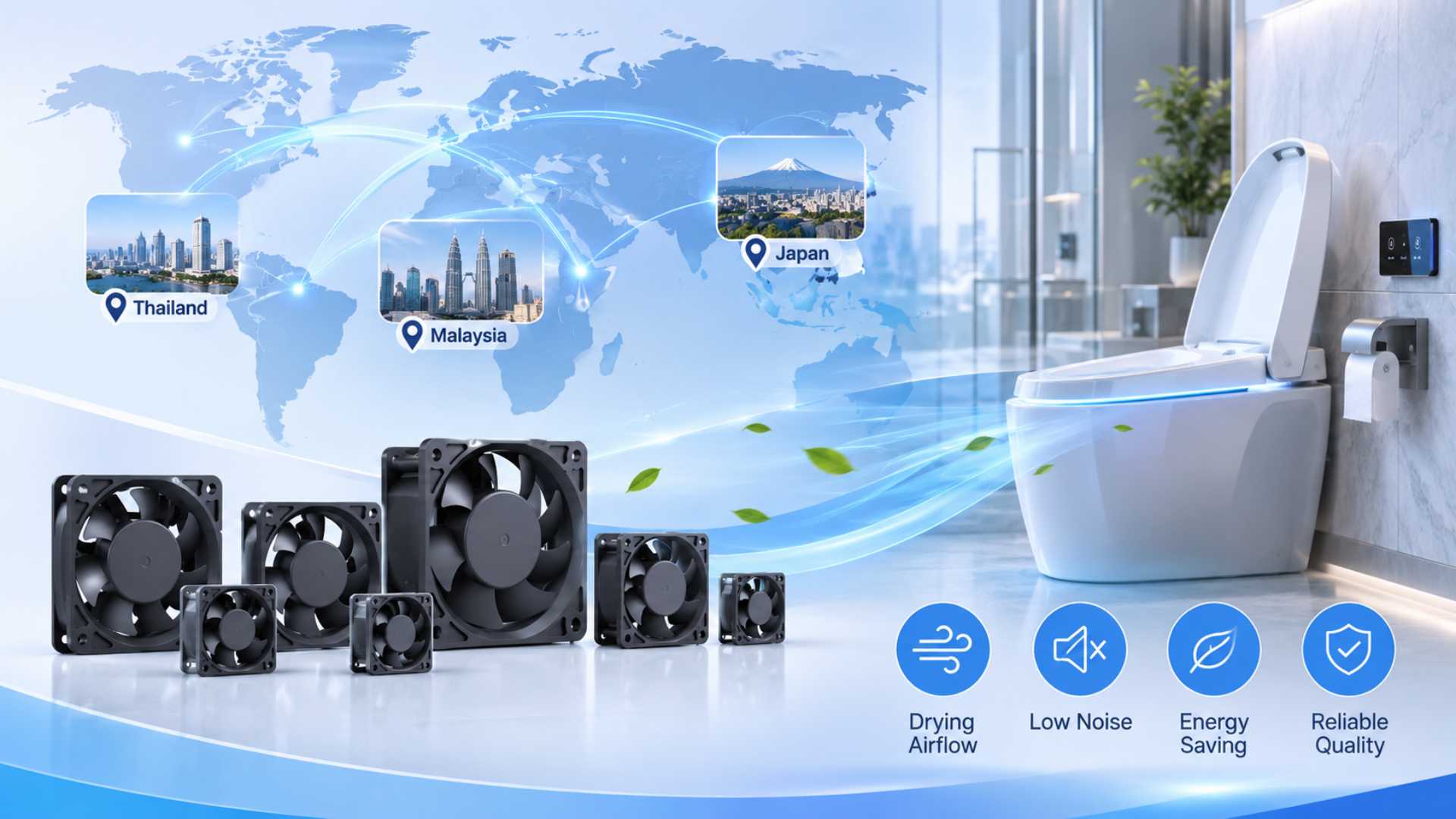
Nov 04, 2026This report details a successful, active mass-supply OEM project undertaken by China Chungfo Fan in the international smart sanitaryware sector. The project features a classic cross-regional supply chain structure: Japanese engineering teams manage product definitions and procurement decisions; China Chungfo Fan (in synergy with the Huitong production base) handles model matching, manufacturing execution, and export alignment; and assembly plants in Southeast Asia incorporate the fans into finished smart toilets for global distribution.
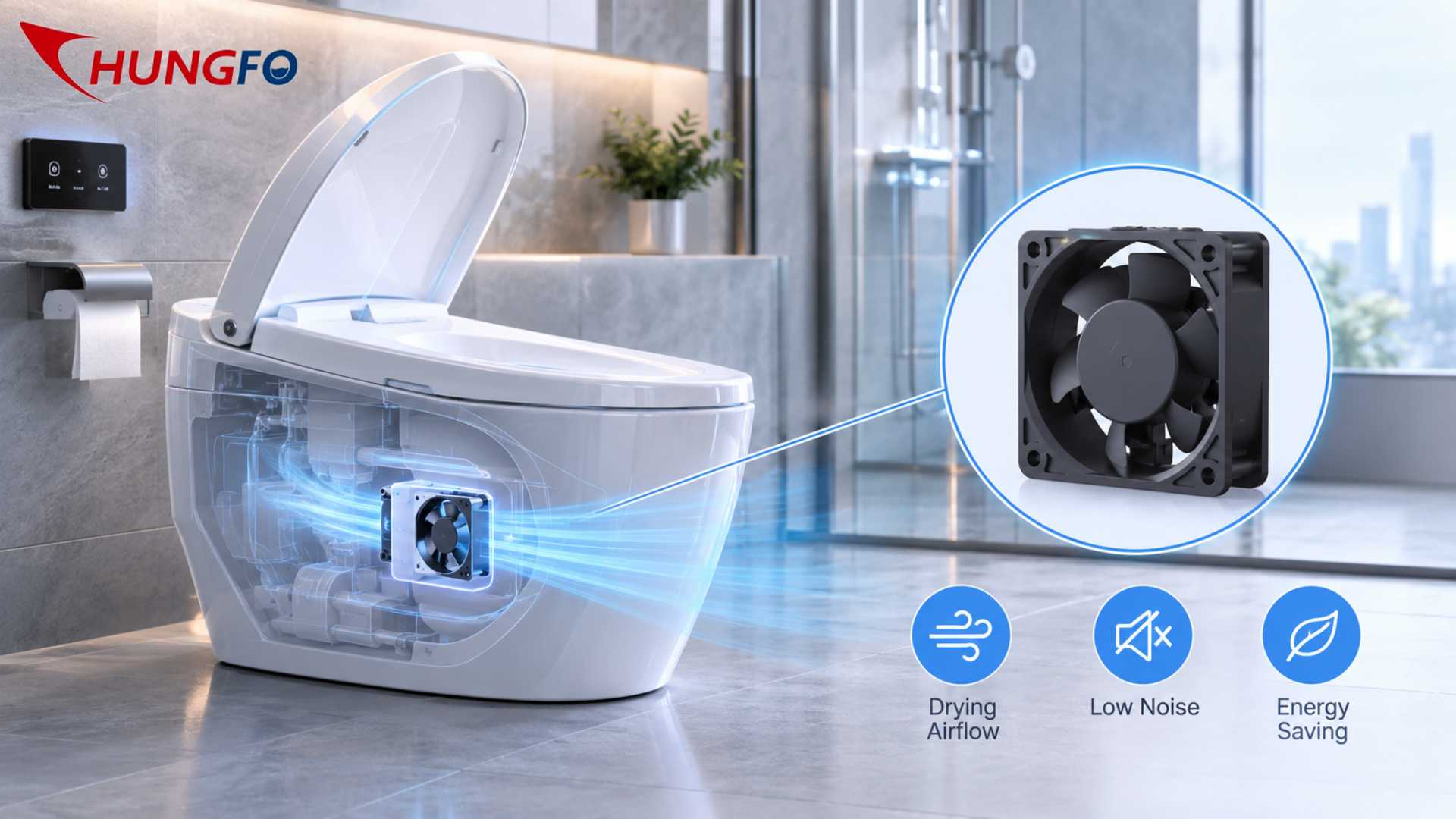
To resolve complex thermal management and airflow challenges inside compact electronic toilet seats—including warm-air drying, deodorization, air circulation, and PCB cooling—Chungfo shifted from passive catalog sales to an application-driven recommendation approach. By evaluating real-world system resistance, Chungfo matched a comprehensive 9-fan matrix comprising HTD03010, HTC05015, HTC05025, HTC05828, HTC06015, HTC06025, HTC07525, HTC07530, and HTC09733. This report outlines the technical matching logic, manufacturing QA framework, and commercial outcomes of this partnership.
1. Case Positioning: Evolving from Catalog Sales to Application-Driven OEM Partnership
1.1 Established Mass-Production Delivery
This case study represents an active, validated mass-production OEM collaboration rather than a prospective market study or early-stage inquiry. In traditional B2B component export, suppliers often operate as passive vendors submitting quotes against buyer-furnished specification sheets, which frequently leads to price-driven competition. In this engagement, Chungfo actively engaged in the customer's front-end airflow and thermal requirement analyses, integrating technical recommendation, prototype validation, structural customization, and manufacturing alignment into a single solution.
All facts and capabilities documented herein are grounded in confirmed operational data, focusing on practical model matching, quality assurance, and cross-border delivery.
1.2 Tri-Regional Supply Chain Roles
Global smart sanitaryware manufacturing relies on specialized cross-regional division of labor. The supply chain path in this project is structured as follows:
Japan Division (R&D & Procurement Decisions): Responsible for overall product definition, airflow/thermal specification standards, vendor qualification, and procurement sign-offs. It enforces stringent thresholds for acoustic noise, static pressure efficiency, and long-term operating life.
China Division (China Chungfo Fan + Huitong Base): China Chungfo Fan acts as the primary entity for project engineering, customer communications, model matching, and export alignment. The Huitong production base (a 20,000 m² industrial park in Dongguan) provides vertically integrated manufacturing—including tooling, precision injection molding, SMT assembly, fan line assembly, and laboratory QA testing.
Southeast Asia Division (Assembly & Application): Receives imported fan components from China for final assembly on local smart toilet production lines serving worldwide consumer markets.
2. Smart Sanitary Industry Trends: Airflow & Thermal Requirements
2.1 Evolution from Basic Fixtures to Complex Mechatronic Systems
Modern smart toilets and electronic bidet seats have evolved from simple washing devices into high-density mechatronic platforms combining water heating, warm-air drying, active deodorization, human sensing, and micro-controller circuit management. As chassis profiles become slimmer, internal spatial constraints become increasingly tight.
This high level of integration creates two distinct airflow requirements within the enclosure:
Functional System Airflow: Fans directly deliver end-user functionality. For example, in warm-air drying modules, blowers force air across PTC heating elements to deliver uniform airflow at controlled temperatures; in deodorization modules, fans must overcome activated carbon filter resistance to extract air effectively.
Enclosure Micro-Climate & PCB Thermal Management: Micro-controllers (MCUs), inverter power modules, and heating control circuits generate significant heat within sealed, compact compartments. Active forced convection is required to prevent thermal accumulation and protect component operating life.
2.2 Acoustic Comfort Challenges in Near-Field Usage
Bathrooms present acoustic challenges due to hard reflective surfaces and close user proximity (often less than a meter from the fan). Consequently, motor electromagnetic hum, bearing friction, impeller imbalance, and high-frequency blade-pass noise can impair the user experience.
Free-air maximum flow ratings alone are insufficient for component selection. Suppliers must analyze the customer's real system resistance curve to identify optimal operating points that balance high static pressure, sufficient airflow, and low noise output.
3. Solution: Reverse Engineering Matching Across 9 Fan Models
3.1 Application-Driven Matching Strategy
Upon receiving customer parameters—including spatial boundaries, voltage supply, target air velocity, noise limits, and connector requirements—Chungfo's engineering team evaluated the physical air duct geometry, impedance curves, and moisture-proofing needs to select optimal fan configurations from the existing product portfolio.
3.2 9-Model Matching & Technical Application Matrix
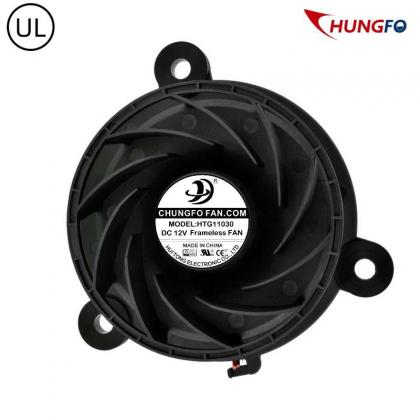
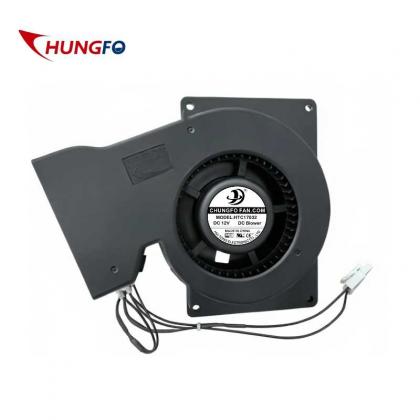
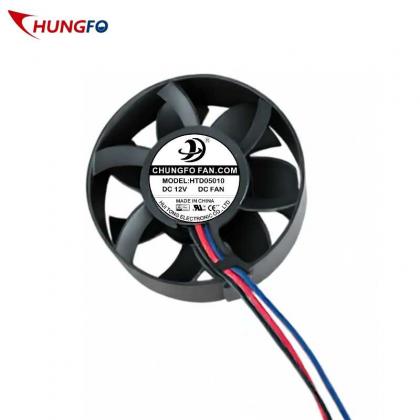
The cornerstone of this partnership is a 9-model DC fan/blower matrix. The specific technical positioning and design considerations for each model are outlined below:
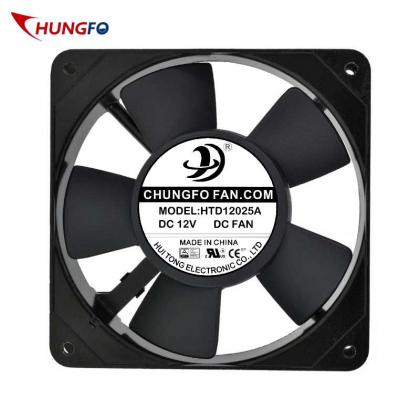
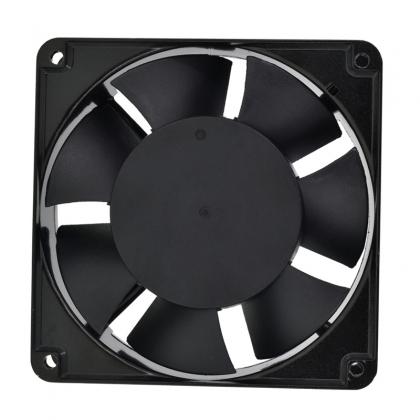
1. HTD03010 | Sealed PCB Compartment Cooling [Mass Production]
Ultra-compact 30×30×10mm design engineered for tight compartments; provides targeted micro-convection to prevent heat buildup around sensitive electronics.
2. HTC05015 | Power Module & Inverter Board Heat Dissipation [Mass Production]
50×50×15mm axial airflow fan structure delivering high static pressure and low power consumption for continuous, stable operation.
3. HTC05025 | Internal Enclosure Air Circulation [Mass Production]
50×50×25mm deep-cavity axial fan equipped with precision bearings to eliminate vibration and audible hum during long duty cycles.
4. HTC05828 | Auxiliary Ducting & Flow Guidance [Mass Production]
58×58×28mm blower design optimized for pressure build-up in narrow, curved air passages to prevent backflow turbulence.
5. HTC06015 | Low-Noise Deodorization Exhaust [Mass Production]
60×60×15mm low-profile fan tuned for near-silent operation under minimal pressure differentials.
6. HTC06025 | Carbon Filter Extraction & Air Purification [Mass Production]
60×60×25mm high-static pressure fan built to overcome dense activated carbon filter resistance while maintaining steady flow rates.
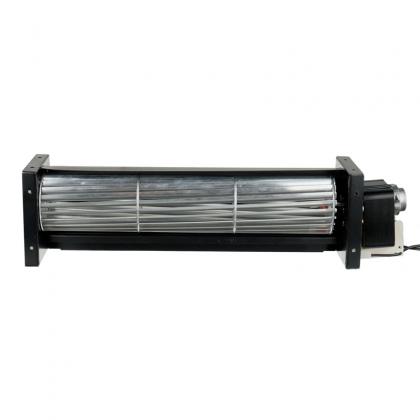
7. HTC07525 | Mid-Power Warm-Air Drying Blower [Mass Production]
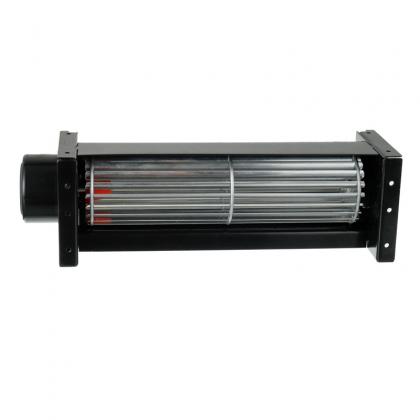
75×75×25mm centrifugal blower featuring CFD-optimized airflow channels that push air efficiently across PTC heating assemblies.
8. HTC07530 | High-Pressure Rapid Drying Blower [Mass Production]
75×75×30mm deep-profile centrifugal blower designed to overcome system impedance and enhance drying efficiency.
9. HTC09733 | Flagship High-Capacity Warm-Air Blower [Mass Production]
97×94×33mm high-pressure centrifugal blower providing maximum airflow capacity and static pressure for premium smart toilet platforms.
4. Manufacturing Synergy & Quality Assurance System
4.1 Vertically Integrated Production at Huitong Base
Long-term OEM fulfillment relies on strong manufacturing execution. China Chungfo Fan collaborates with the Dongguan Huitong production base (spanning 20,000 m² in Dongkeng, Dongguan) to provide complete internal production control:
Tooling & Injection Molding: In-house mold tooling design and plastic injection facilities enable rapid adjustment of fan housing structures and mounting dimensions.
SMT Electronics Assembly: Automated SMT lines assemble drive control PCBs under tight process controls to minimize electrical defect rates.
Winding & Final Assembly: Automatic motor winding and standardized assembly lines ensure consistent coil parameters and precise bearing installation.
4.2 In-House Reliability & Testing Infrastructure
To ensure reliability under warm and humid bathroom conditions, Chungfo enforces strict testing protocols:
Dynamic Balancing Verification: Impellers and rotors are balanced to eliminate residual vibration and mechanical noise during high-speed rotation.
Computerized Wind Tunnel Testing: Measures P-Q performance curves (Airflow vs. Static Pressure) to confirm that fans perform to spec under simulated duct resistance.
Anechoic Acoustic Chamber (< 18 dB): Measures sound pressure levels, octave bands, and abnormal noise signatures to guarantee quiet operation.
Environmental Chamber (Temp & Humidity): Simulates temperature and humidity cycles to verify insulating varnish, PCB, and bearing grease durability over time.
Salt Spray Corrosion Testing: Validates corrosion resistance for metal components, lead terminals, and solder joints exposed to moist environments.
RoHS / REACH Compliance Analysis: Verifies restricted substance compliance prior to international export.
4.3 Quality System Certifications
Chungfo and its manufacturing partners maintain a full suite of quality management and product safety credentials:
System Certifications: Certified to ISO 9001 (Quality Management), ISO 14001 (Environmental Management), and IATF 16949 (Automotive Quality Management).
Product Safety Credentials: Certified for CE, UL, cUL, TÜV, and CCC requirements. (UL Traceability Reference: UL Product iQ listing GPWV2.E311396).
Environmental Compliance: Fully compliant with RoHS and REACH standards via SGS testing verification.
5. Commercial Results & Value Delivered
5.1 Primary Client Benefits
This partnership yielded concrete operational gains across the client's engineering, procurement, and assembly teams:
Supply Chain Consolidation (BOM Optimization): By sourcing all 9 fan models from a single specialized partner, the client eliminated multi-vendor coordination costs and simplified component traceability.
Enhanced End-User Comfort: Optimized static pressure and dynamic balancing improved drying times and reduced operational noise levels, enhancing consumer satisfaction.
Seamless Cross-Border Communication: Engineering updates from Japanese design teams were efficiently implemented at the production level in China and delivered on schedule to Southeast Asian assembly plants.
5.2 Strategic Value for China Chungfo Fan
This project confirms Chungfo's ability to execute complex, multi-model OEM fan programs for global tier-one appliance brands. The technical insights gained in high-humidity protection, compact static pressure matching, and low-noise motor tuning strengthen Chungfo's position across environmental appliances, energy storage systems, and medical electronics markets.
6. Frequently Asked Questions (Client FAQ)
Q1: How do fans resist moisture and corrosion inside humid bathroom environments?
A1: Chungfo applies protective measures based on specific mounting locations, including conformal PCB coatings, moisture-resistant wiring harnesses, sealed bearing designs, and IP55+ ingress protection options upon request.
Q2: Why is maximum free-air flow an insufficient indicator for drying performance?
A2: Free-air ratings measure performance at zero static pressure. Real smart toilet ducting introduces restriction from heaters, bends, and grilles. Actual airflow is determined by the intersection of the fan's P-Q curve and system resistance. High-pressure blowers (e.g., HTC07530, HTC09733) maintain strong airflow against high resistance.
Q3: Can Chungfo customize wiring harness lengths and connector interfaces?
A3: Yes. Chungfo routinely customizes wire lengths, pin sequences, connector brands (such as JST, MOLEX, and AMP), and custom housing mounting tabs to fit client duct constraints.
Q4: How is batch-to-batch quality consistency maintained in cross-border fulfillment?
A4: We enforce IATF 16949 and ISO 9001 guidelines at every stage, including IQC (incoming material inspection), IPQC (in-process control), FQC (final quality inspection), and OQC (outgoing quality checks for dynamic balance and electrical parameters). Any design or process modification requires strict PCN (Process Change Notification) approval.
Q5: What technical documentation is provided to client engineering teams during evaluation?
A5: Chungfo provides complete 2D/3D CAD models, product specifications, measured P-Q curves, noise spectral analysis, SGS environmental reports, and safety certificates (UL/CE) to support formal design reviews.
7. Summary & Recommended Next Steps
7.1 Summary
This case study demonstrates China Chungfo Fan's expertise in providing application-matched fan systems for high-end smart sanitaryware platforms. Through exact engineering matching across 9 fan models, vertically integrated manufacturing at the Huitong base, and strict quality assurance, Chungfo established a reliable, long-term OEM partnership within a global supply chain network.